Societal Mirror 2026: Survey Methodology
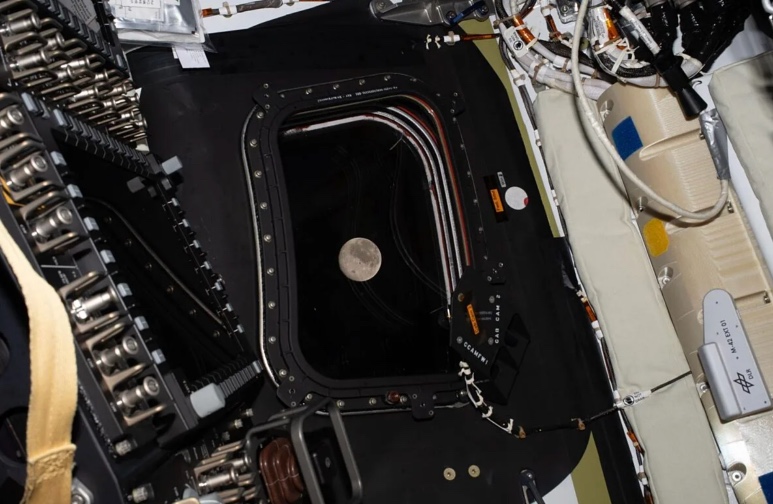
Image description
Most header images on this site are from NASA’s Webb telescope. This image shows the moon, but with the perspective of an observer from the Artemis II rocket. It reveals the machinery surrounding the image of the moon – a modern take on the Buddhist insight that there is a difference between looking at the moon and the finger that points to it. The Societal Mirror is a finger that points to the moon of the Shambhala community. It is a tool for looking at the community, but it is not the community itself. The machinery of the survey process – the design, implementation, and analysis – is what allows us to point to the moon, but it is not the moon itself. This image reminds us to be mindful of the difference between the finger and the moon, and to use the survey as a tool for understanding, rather than as an end in itself.1 Survey Background
The Shambhala Societal Mirror initiative uses empirical methods to explore the dynamics of the Shambhala community over time. This initiative began in 2021, with surveys implemented in January of every year between 2022 and 2026. The initiative serves a community-wide information need: the Board requires data to define and monitor ends under Policy Governance and to assess community health; Shambhala Global Services (SGS) draws on findings for operational planning, resource allocation, and program development; the Global Community Council (GCC) uses the results to understand centre and group trends; centre leaders seek benchmarking data to inform their decisions; and the broader community benefits from transparent reporting that builds trust and reveals critical insights on overall health.
The Data Group operates with methodological independence and a commitment to unbiased reporting. It maintains a neutral, observational stance and presents findings without predetermined interpretations.
The implications offered on the Societal Mirror home page under each section reflect discussions within the Data Group and do not represent the views of the Shambhala Board, Global Community Council or Shambhala Global Services.
2 Questionnaire Development
The 2026 questionnaire design process reflected the Data Group’s annual cycle of consultation with end users. The Data Group met weekly throughout the year to refine question wording, assess comparability with prior-year items, and align content with emerging information needs. This year’s process also featured structured consultations with the Shambhala Board, SGS staff, and the GCC, each of which identified priorities for the 2026 survey. The Board’s interest in monitoring community health and long-term engagement trends, SGS’s need for actionable operational data, and the GCC’s focus on centre and group vitality all shaped the final questionnaire. These same advisors reviewed and commented on the completed drafts of the survey questionnaires. efforts to maximize response rates — including appropriate survey length and question relevance — guided decisions about which items to retain, revise, or drop.
This year there was a new section that asked respondents to self-identify as teachers, meditation instructors (MI) and as holders of leadership positions within their center. These respondents were asked a series of questions designed to provide information about what would assist them in the performance of their respective functions.
The members and friends survey was translated into French, Spanish, German and Italian using Deepl translation software.
The centre and group survey differed from the leadership surveys conducted in prior years in its unit of analysis. Rather than sampling individual leaders, we asked one designated respondent per Shambhala centre or group to complete a survey on behalf of the centre as a whole. This design allows us to characterize the centre as an institution — its programs, challenges, and vitality — rather than capturing the experience of any particular individual.
3 Survey Sample and Implementation
The members and friends survey list was drawn from the Shambhala Database (SDB) on January 1, 2026. The list included only members and friends of Shambhala, and the questionnaire was sent in a person’s preferred language — English, French, German, Italian, and Spanish. A total of 6,713 contacts were identified in this process, compared to the 7,425 contacts identified by the same process in January 2024. Although all answers were anonymous, we retained the language, centre size and region as recorded in the SDB on the responses used for reporting. A total of 112 centres and groups were identified in the SDB. We retained centre size and region as shown in the SDB on the responses received.
The members and friends survey opened on January 9, 2026, with reminders sent on January 19, January 26, and February 4th. The survey closed on February 8th. The centre and group survey opened on January 22, with reminders sent on January 29, February 6 and February 19th. The survey closed on February 22. Both surveys closed on February 10, 2026.
4 Administrative Data Sources and Methodology
In addition to survey responses, the Societal Mirror draws on administrative records from the Shambhala Database (SDB) to provide context, to profile respondents, and to measure organizational trends. These administrative datasets are extracted separately from the survey process and do not require survey participation.
Member Records. Administrative data on individual members was extracted from the SDB members table as of January 1, 2026. These records include demographic information, member type (Member, Friend of Shambhala, or Non-Member), centre affiliation, preferred language, and the date of first contact with Shambhala. First contact dates were imputed from the earliest available date recorded in the database (either date of record creation or recorded date of first contact), and members were classified into five generational cohorts based on their first contact date: before 2000, 2000–2007, 2008–2012, 2013–2018, and since 2018.
Centre Records. Centre and group metadata including name, location, region, visibility status (Active, Hidden, or Dissolving), and geographic coordinates were extracted from the SDB centers table as of January 1, 2026. Centre size was derived from the count of members affiliated with each centre. SDB architecture requires that every member record be affiliated with a centre record. Centres were classified into four size categories: Small (25 or fewer members), Medium (25–75 members), Large (75–150 members), and Very Large (more than 150 members).
Enrollment and Program Participation. Data on member participation in programs that required registration were extracted from three SDB tables. The calendar table records all events offered, the registrations table records member registrations for those events, and the history table records actual attendance. Events were filtered to include only those requiring registration, visible on the public calendar, and occurring before December 31, 2025. For members with multiple registrations or participation records for the same event, final status was determined as follows: registered and participated > registered only > participated without registering. Participation data were summarized by location (centre offering the event) and year. Links to member records provided for analysis of where program participants came from, whether local or not.
Membership Transitions. To track net changes in member and friend populations over time, we extracted the change log from an SDB table that which records all approved changes to member status (Member ↔︎ Friend of Shambhala ↔︎ Non-Member). Changes were filtered to include only those approved during the study period, January 1, 2018 through December 31, 2025. For each member-year combination with multiple status changes, only the first and final status were used to calculate net transitions (Friend to Member, Member to Friend, acquisition of new members or friends, and loss of members or friends to non-member status). These yearly transitions were aggregated by centre to estimate historical membership trends and to project current centre size back to prior years.
5 Societal Mirror Members and Friends Survey Response Rates and Response Bias
Of the 6,713 contacts secured from the Shambhala Database, 6,205 (92%) were valid, unblocked, and non-opted-out email addresses. Of these, 98 emails subsequently bounced. We received 1,335 responses to this survey. Response rates are calculated as the percentage of valid invitations that yield a response. Overall, the Members and Friends survey had a response rate of 21.5%, slightly higher than the 20.1% recorded in 2024. The table below shows response rates by survey language. German was offered for the first time in 2026. Response rates varied considerably across languages: French, German, and Italian respondents all replied at substantially higher rates than English or Spanish respondents, though each non-English language group represents a small share of the overall contact pool.
5.1 Members and friends survey response rates by survey language
| Language of Survey | Included in SDB contacts | Invited (valid emails) | Replied | Response rate | Portion in SDB contacts | Portion in respondent pool |
|---|---|---|---|---|---|---|
| English | 5,871 | 5,432 | 1,080 | 19.9% | 87.5% | 80.9% |
| French | 317 | 287 | 106 | 36.9% | 4.7% | 7.9% |
| German | 335 | 306 | 116 | 37.9% | 5.0% | 8.7% |
| Italian | 24 | 21 | 8 | 38.1% | 0.4% | 0.6% |
| Spanish | 166 | 159 | 25 | 15.7% | 2.5% | 1.9% |
| Total | 6,713 | 6,205 | 1,335 | 21.5% | 100.0% | 100.0% |
6 Societal Mirror Centre and Group Survey Response Rates and Response Bias
Because the 2026 centre and group survey was directed at centres as institutions rather than at individual leaders, response rates reflect the proportion of invited centres that submitted a response. Of the 108 centres and groups invited to participate, 72 (66.7%) submitted a response. Direct comparison with prior-year leadership survey response rates is limited given the change in survey design.
7 Analytic Approach
The 2026 survey of members and friends included four types of close-ended questions: multiple choice, check-all-that-apply, rating scales, and open text. Some respondents skipped items and questions, and denominators differed for different questions. The 2026 centre and group survey included multiple choice and rating questions, plus one check-all-that-apply question.
The answers to multiple choice and to rating questions are presented as simple frequencies, using as a denominator the number of responses to the question. The answers to check-all-that-apply questions are also presented as frequencies, using as a denominator the total number of survey responses. Some of the questions included in the 2026 surveys were the same as questions included in the 2024 or 2025 surveys. In these cases we present comparisons of responses across years where comparisons are meaningful. Because the centre and group survey changed its unit of analysis in 2026, direct year-over-year comparisons with prior leadership surveys are limited and are noted where they are made.
In some cases we have shown responses separately based on whether the respondent answered yes or no to the question of whether they relate to a Shambhala group or centre, and separately based on the time frame in which the respondent first connected with Shambhala (before 1990, from 1990-2008, 2008-2018 and since 2018).
Both the Member and Friend and the Centre surveys included opportunities to add open-text responses to selected questions. We used content analysis to sort the responses into categories. We report these categories and show sample responses for each category.