Member Awareness of Global Structure
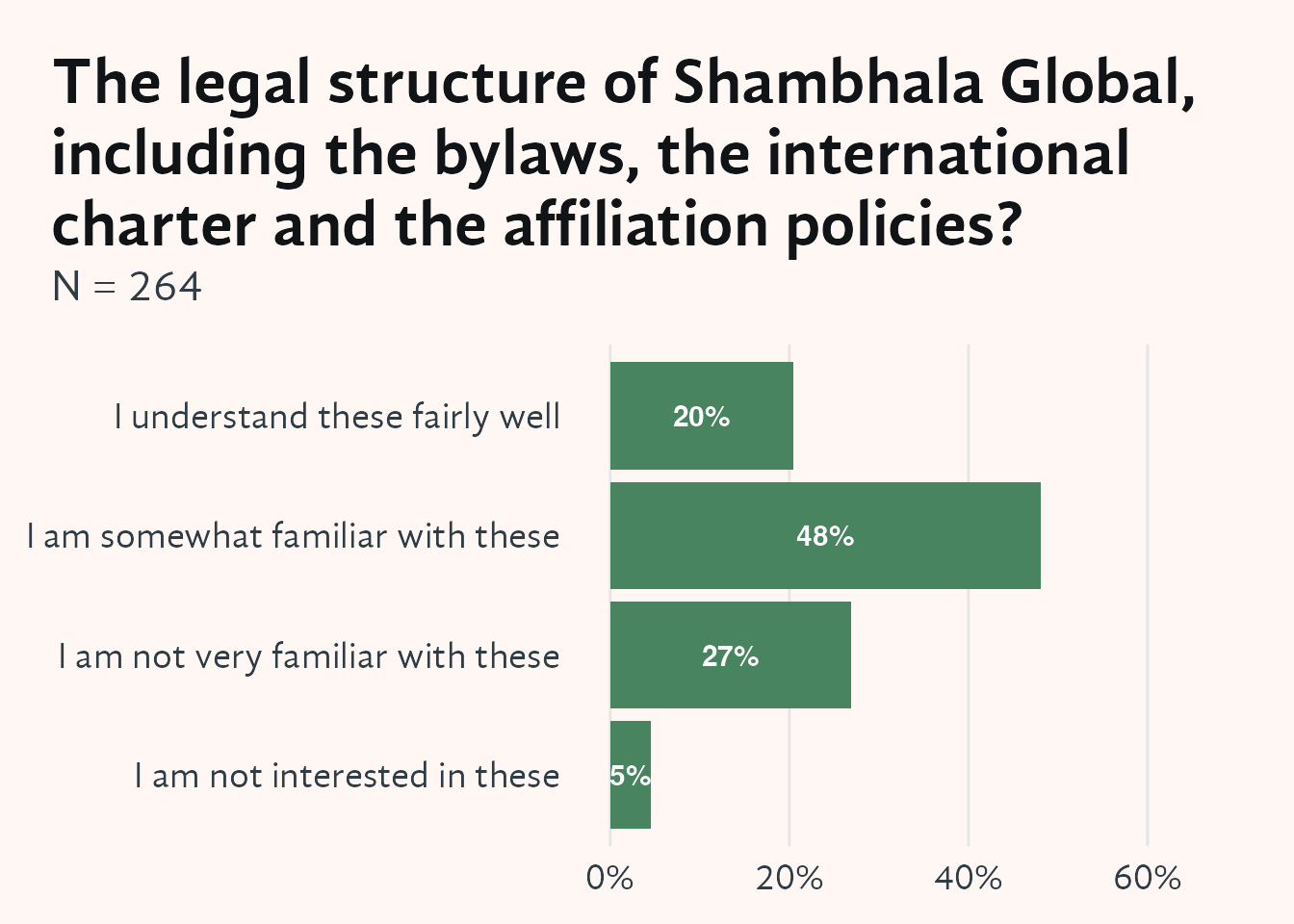
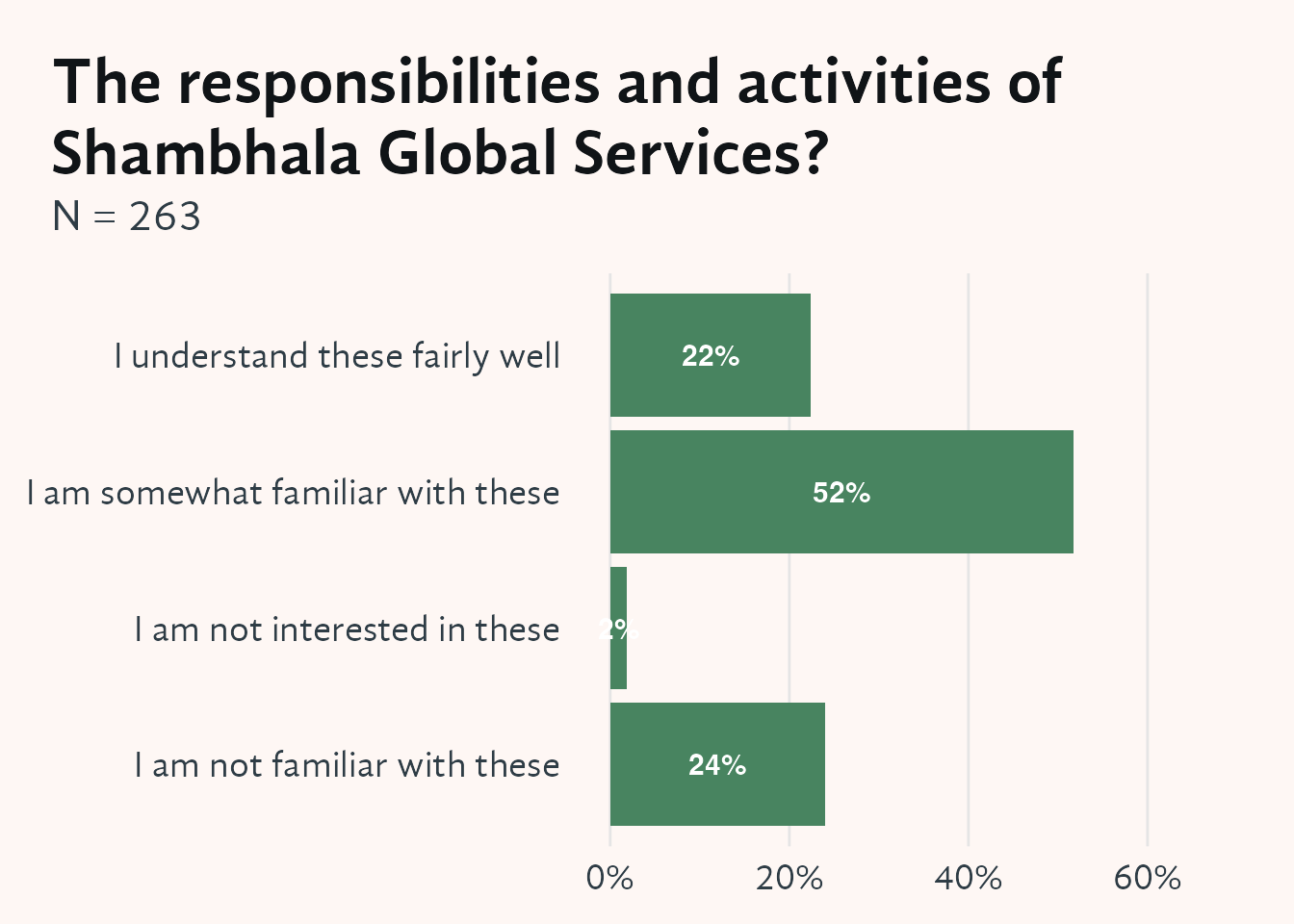
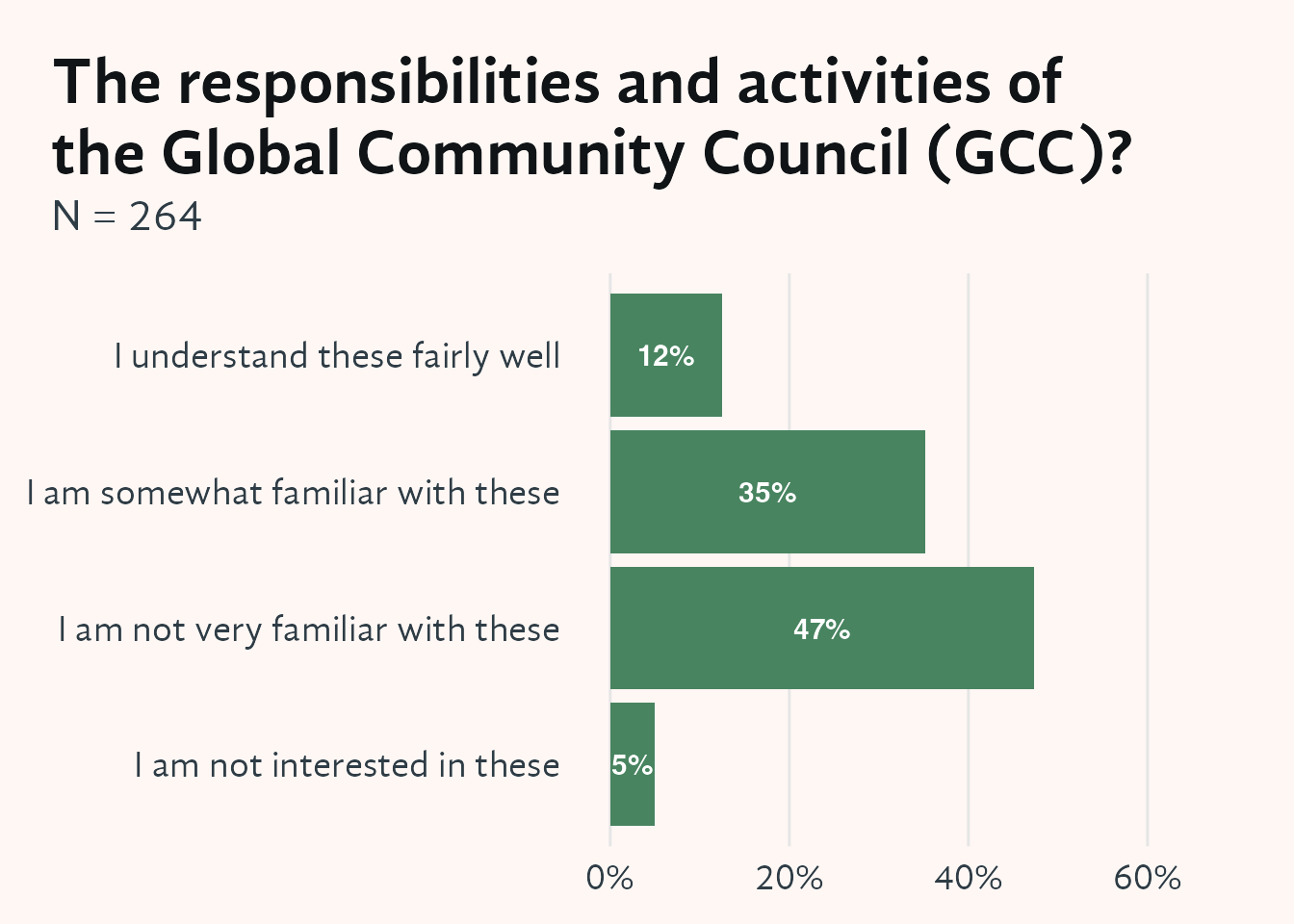
109 survey respondents added additional comments to the question about familiarity with the shared elements of Shambhala. The largest category of responses were from people who felt the governance elements were not accountable to the community or did not represent their interests:
“Although I am not personally interested in Shambhala Online, it is a beautiful asset for the future. At present, it is mainly being developed by SGS, without contribution from other parts of the mandala. This could be developed also more to serve strategic purposes; including wishes from members and Centres.”
“Better communication amongst those Centers especially in regards to soliciting donations. If you add the archives and so forth, it looks and sounds as if Shambhala is on the bank of bankruptcy. And we are not even talking about Naropa’s University. Most of all, we are missing a head and a heart.”
“I find the board, global leadership, and my local leadership to not represent my interests or my concerns. I personally do not have any faith or trust in the global leadership or the guidelines or accountability or harm-prevention.”
“Board is too American, too much drama. Less of each.”
The second largest category of comments were from people appreciating the global elements, even if they were not personally involved:
“I’m not an organization / admin person. I appreciate the work others take on, am grateful.”
“I have moved from the town where I connected with Shambala and have drifted away, yet am continually grateful for the programs and retreats that I attended over the years with Shambhala and send all best”
“I consider all the above groups and their activities vital to all sangha members’ practice and how Shambhala teachings and practices evolve and influence how we enlighten our country’s and the world’s cultures.”
Another relatively large category of comments indicated that the global elements of Shambhala are confusing — they did not understand what each element did and what their responsibilities are:
“I have been rather discouraged by attempts to learn, at a simple / overview level about GCC, the FRSB, and the Shambhala Board. Using the shambhala.org website, it seems to get ungraspably complex very quickly.”
“I don’t see how these boards and committees are relevant to my practice or teaching.”
The next largest category of responses were from people who felt distant or alienated from the Shambhala community as it exists now:
“I was on the path to becoming a meditation instructor because I coordinated Dathuns at Karme Choling. There was a lot of confusion and other mishaps that led to my breaking away.”
“I’ve spent most of my adult life in and around Shambhala centers, until our community splintered. I haven’t stepped foot in one since 2019.”
“A lot of community struggle for a long time. I have been a community member and active practitioner over 50 years. I keep pretty quiet and I’m still here. A lot of sadness.”
Some other respondents commented about access issues, particularly around everything in Shambhala being in English, and around personal challenges of time and distance. Others indicated that they already participate as volunteers with the global elements.
Leader Awareness of Global Structures
Respondents who self-identified themselves as leaders were asked about their familiarity several elements of Shambhala’s organizational structure, including the legal structure of their local centre or group, the Shambhala Board, Shambhala Global Services (SGS), and the Global Community Council (GCC).