Study Activities

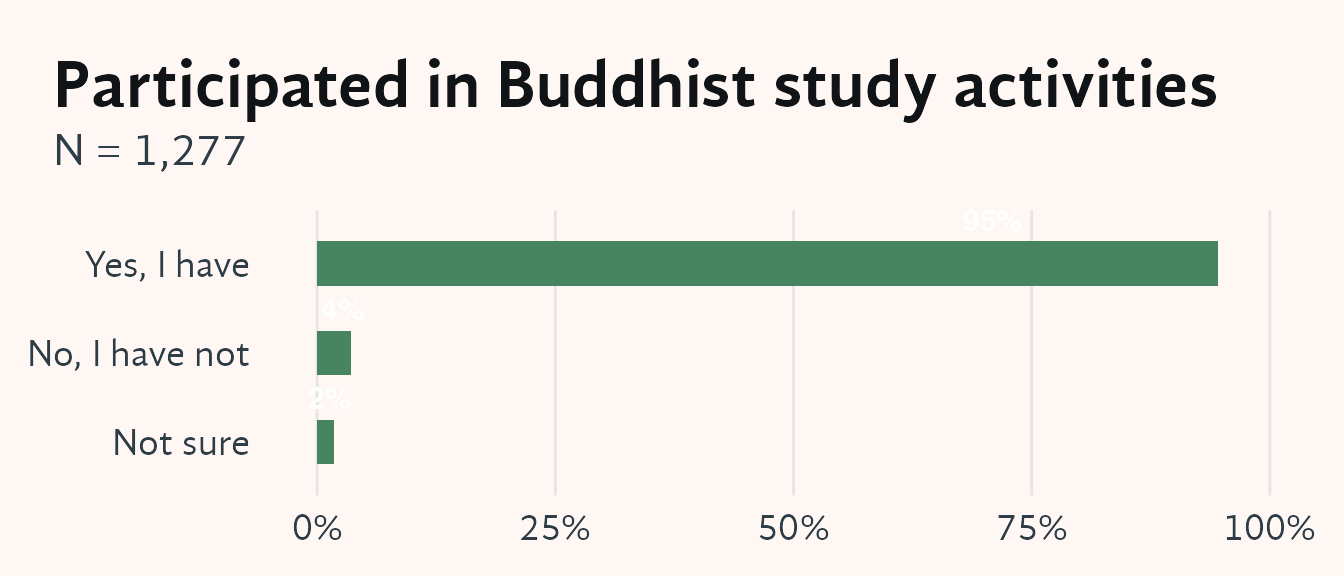
1 Participation in Buddhist study activities
| Have you ever participated in a teaching or study related to Buddhism? | |
| N = 1,277 | |
| Response | Percent |
|---|---|
| Yes, I have | 95% |
| No, I have not | 4% |
| Not sure | 2% |
Almost all the survey respondents have participated in some form of Buddhist study.
2 Sources of Buddhist teaching study activities
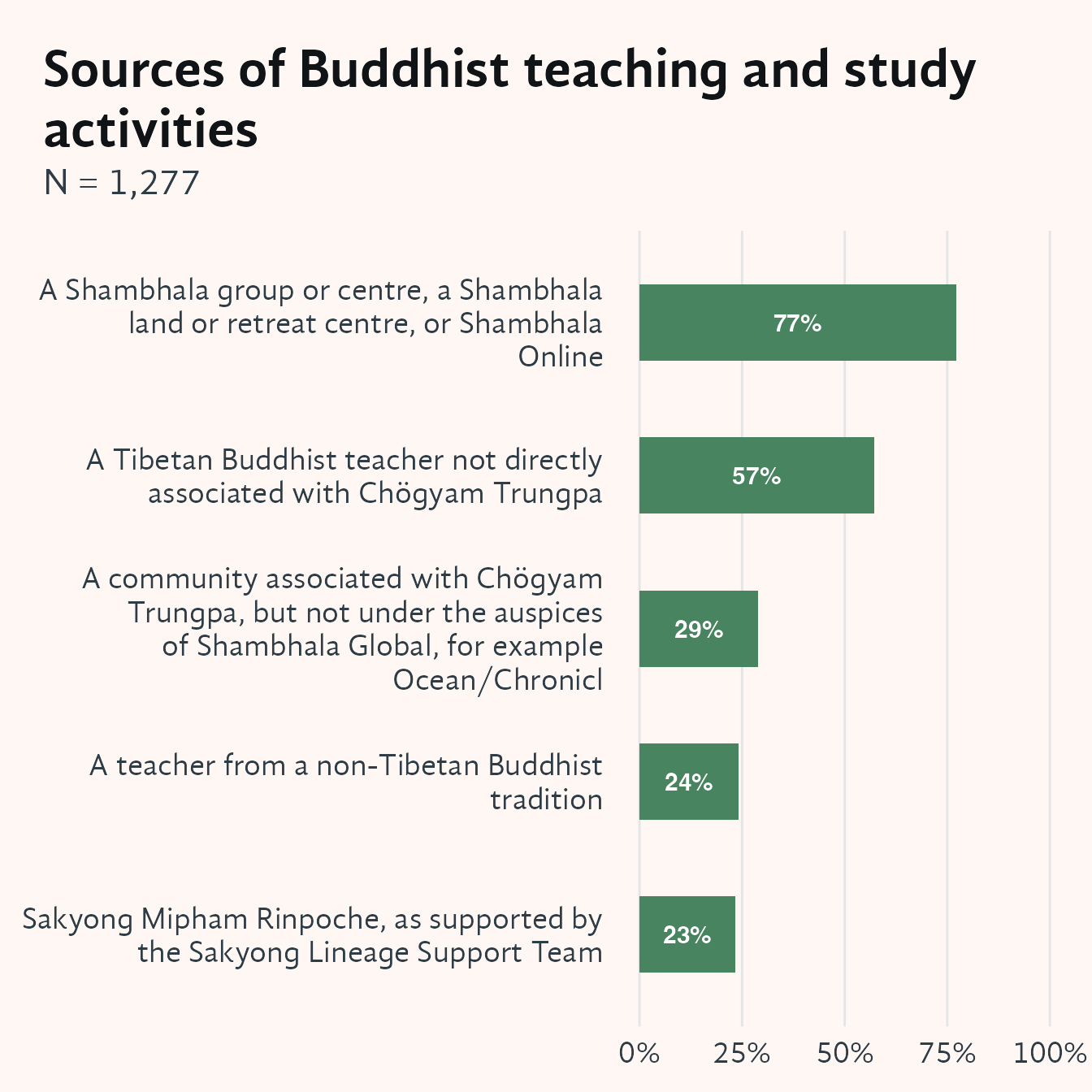
The ordering in the chart reflects which approaches were most widely used across the community.
| Study patterns among those who participated in Buddhist study activities | |
| N = 1,164 respondents participated in at least one study activity | |
| Source of study activities (all selected) | Percent participating |
|---|---|
| A Tibetan Buddhist teacher not directly associated with Chögyam Trungpa | 57% |
| A teacher from a non-Tibetan Buddhist tradition | 24% |
| A Shambhala group or centre, a Shambhala land or retreat centre, or Shambhala Online | 77% |
| Sakyong Mipham Rinpoche, as supported by the Sakyong Lineage Support Team | 23% |
| A community associated with Chögyam Trungpa, but not under the auspices of Shambhala Global, for example Ocean/Chronicl | 29% |
In this question, survey respondents could check as many sources as applied to them. The sources of Buddhist study that respondents have engaged with are notably diverse. While over three quarters have studied Buddhism at a Shambhala location, well over half have studied with a Tibetan Buddhist teacher outside the Shambhala environment, and nearly a quarter with a teacher outside Tibetan Buddhism. Almost 30% have explored Buddhism within Chogyam Trungpa’s tradition but outside Shambhala. Almost one quarter study with Sakyong Mipham.
3 Participation in Shambhala Path programs
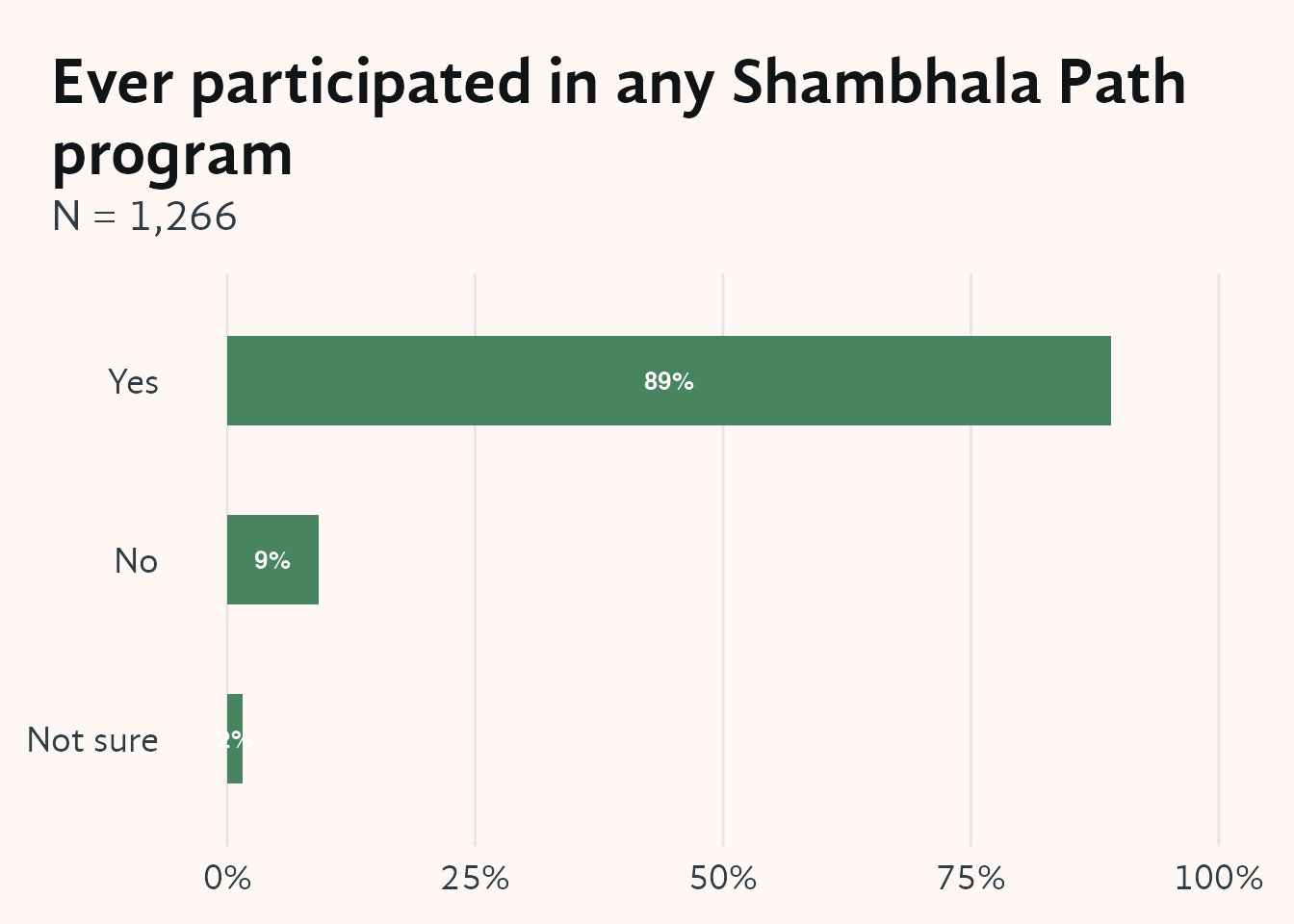
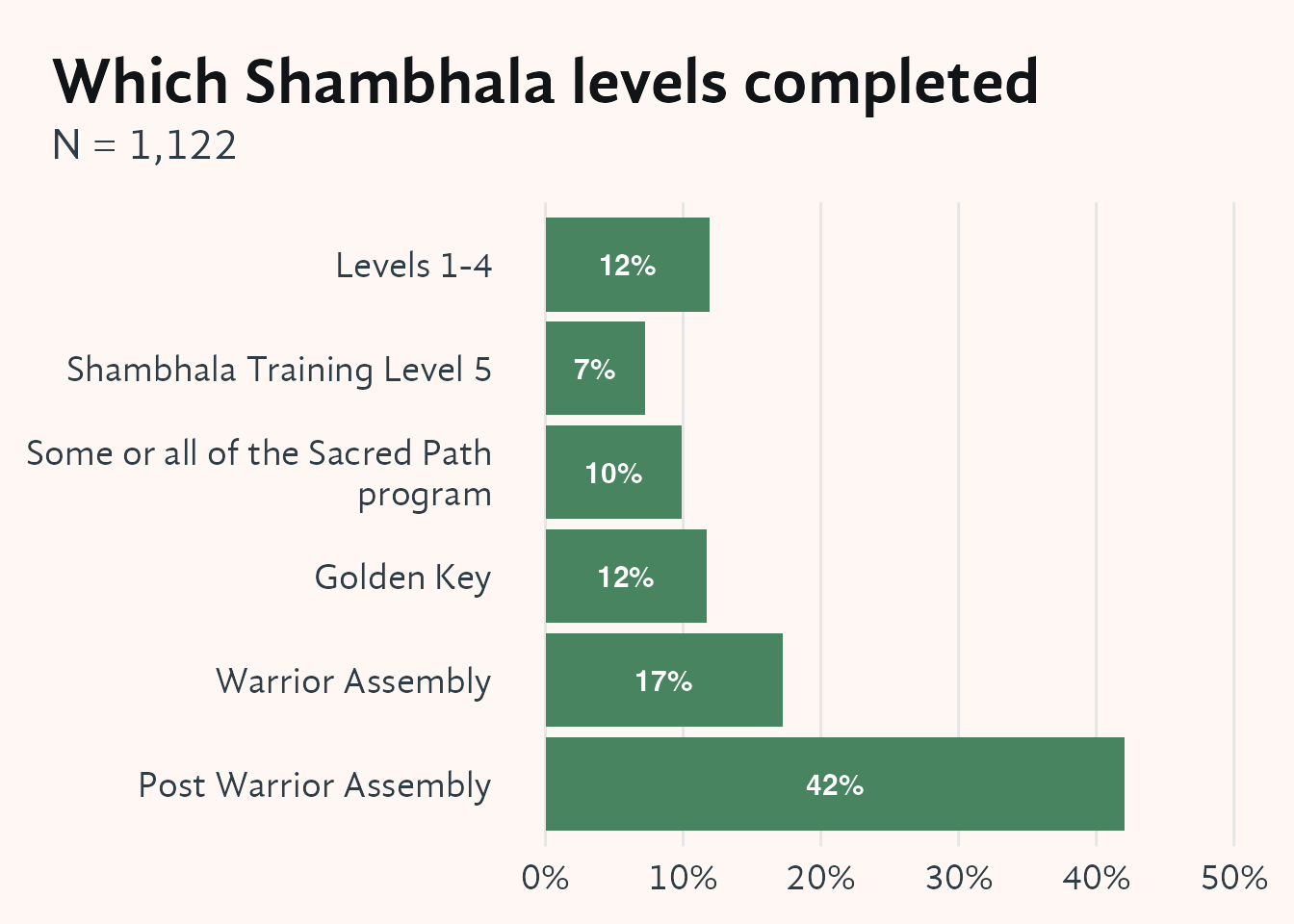
Nearly 90% of respondents have participated in a Shambhala Path program, and over 80% have participated in more advanced study. A majority have participated to Warrior Assembly or beyond. This reflects that those who have responded to the survey include more longer-term Shambhala members.
| What was the most advanced Shambhala Path program that you participated in? | |
| N = 1,122 | |
| Shambhala levels | Percent that participated |
|---|---|
| Levels 1-4 | 12% |
| Shambhala Training Level 5 | 7% |
| Some or all of the Sacred Path program | 10% |
| Golden Key | 12% |
| Warrior Assembly | 17% |
| Post Warrior Assembly | 42% |
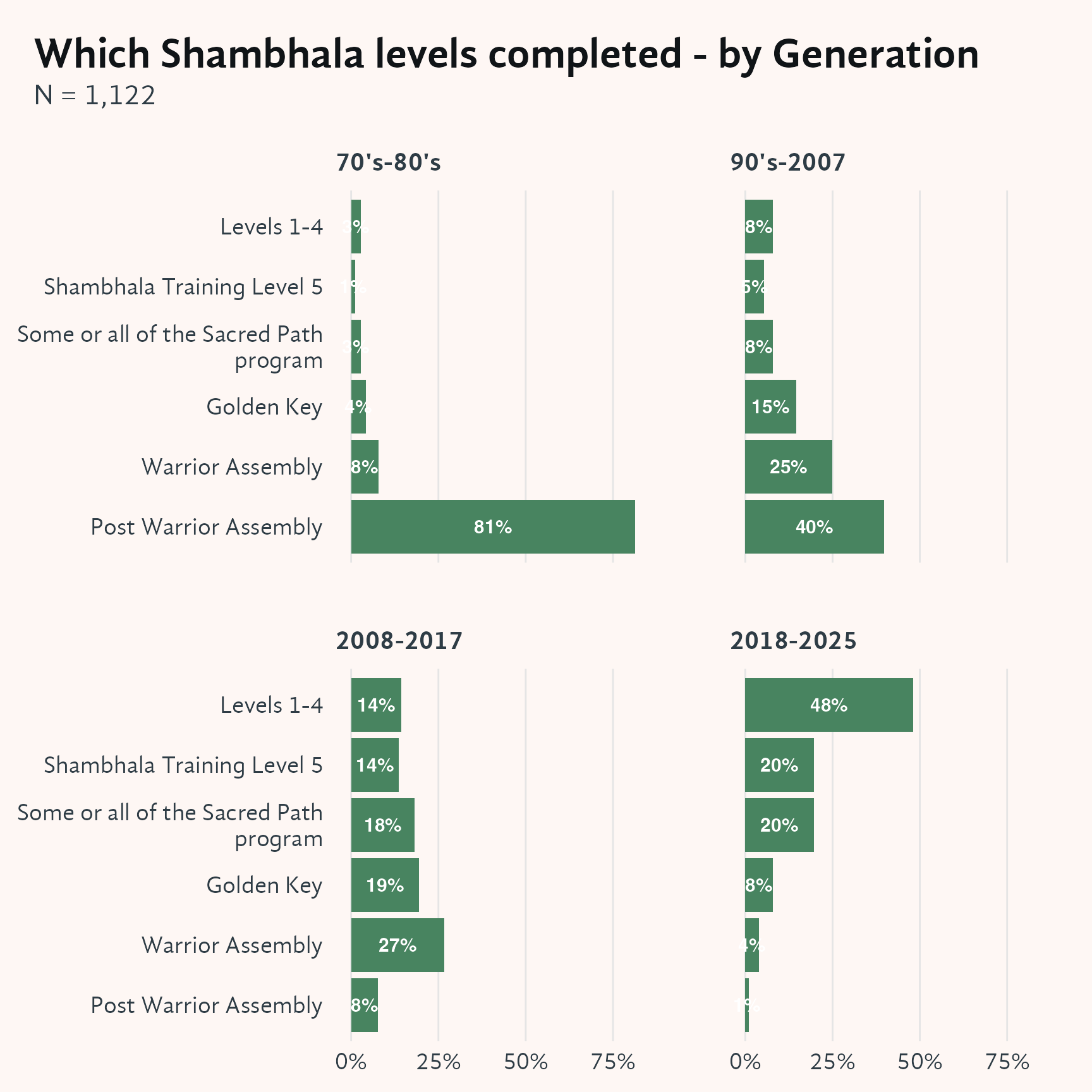
While it is clear that longer term members have generally studied at a more advanced level, of the members and friends who have been with Shambhala for at least nine years, nearly 30% have not studied beyond Shambhala Training Level 5.
A substantial majority, over 80% of the longest term participants have studied beyond Warrior Assembly. However, only 40% of those who first came to Shambhala between 1990 and 2007 have done so, and only a tiny portion of those joining after 2007 have done so.
A substantial majority of surveyed members report having participated in a Shambhala Path program at some point.
4 Interest in continued study
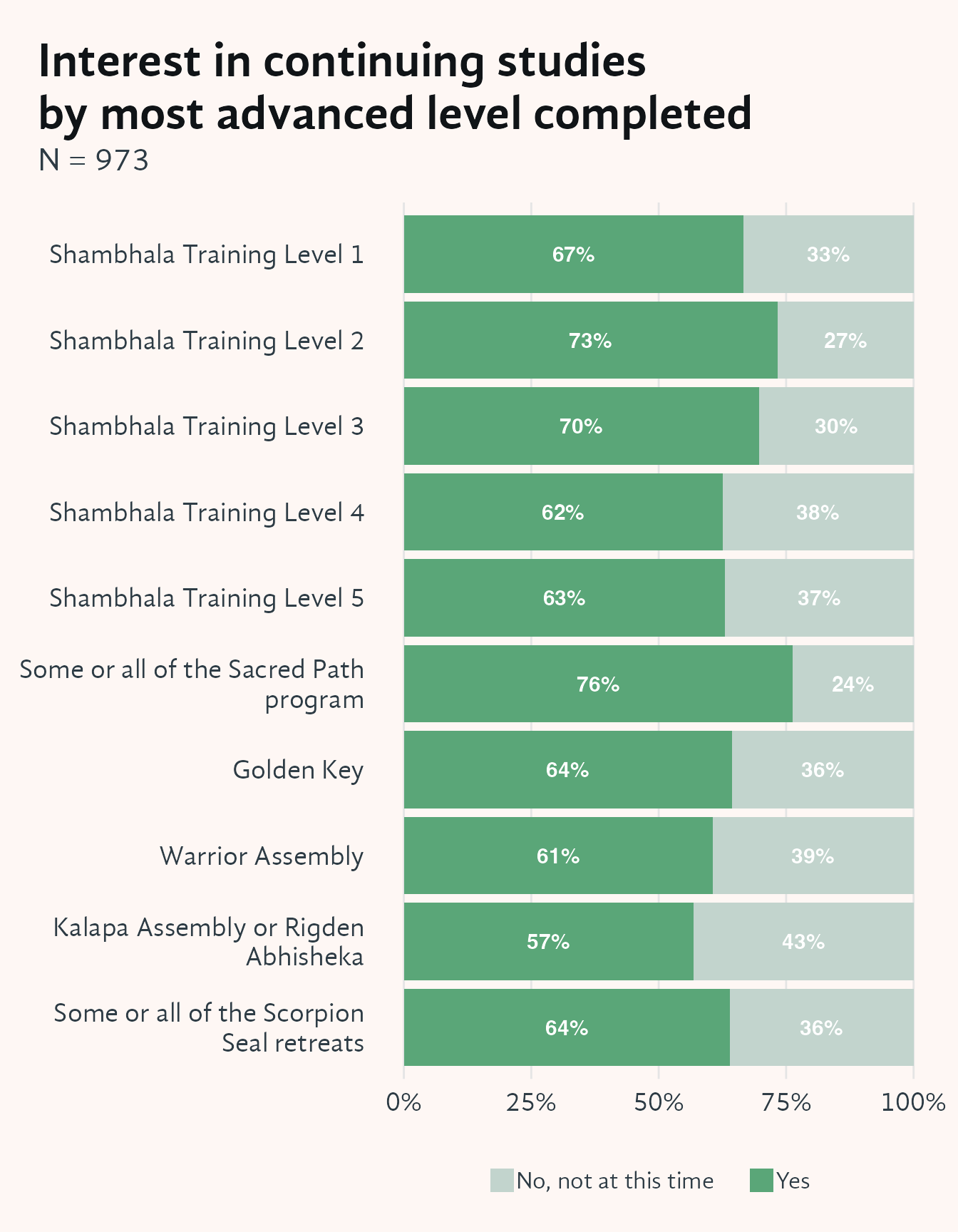
Interest in continuing Shambhala Path studies is high across all levels of prior study. Those at intermediate levels often express the strongest desire to advance further.
136 respondents added comments to the question about whether they were interested in continuing their study of the Shambhala teachings. The largest category of responses were simply uncertain about whether they would continue. Others felt that their continuing was conditional:
Examples…
For many respondents, this depends on what is offered, and there was a lack of certainty about whether there is a path for continuing to advanced teachings:
Examples…
A relatively small number of respondents noted that they have decided they are no longer interested in the Shambhala path, and/or have many concerns about power abuses in the Shambhala community:ß
Examples…
5 Availability of guidance resources
| Availability of guidance sources | ||||
| Source | Useful | Somewhat useful | Not useful or don't know | N |
|---|---|---|---|---|
| A sangha or community member whom I respect | 82% | 15% | 4% | 1,154 |
| A meditation instructor in the Shambhala community | 55% | 25% | 20% | 1,121 |
| One or more teachers connected to Chogyam Trungpa, Rinpoche | 71% | 19% | 9% | 1,150 |
| Books by Chögyam Trungpa | 77% | 18% | 5% | 1,152 |
| One or more teachers not connected to Chögyam Trungpa, Rinpoche | 68% | 22% | 10% | 1,117 |
| Other books about Buddhism | 77% | 20% | 3% | 1,131 |
For this question, respondents could check as many boxes as they wished. By far the most respondents said that a sangha member whom they respect was useful to them. Over three quarters find books useful as guidance sources, whether or not by Chögyam Trungpa. Many respondents found teachers helpful. Only just over half of respondents found an MI to be helpful as a guidance resource.